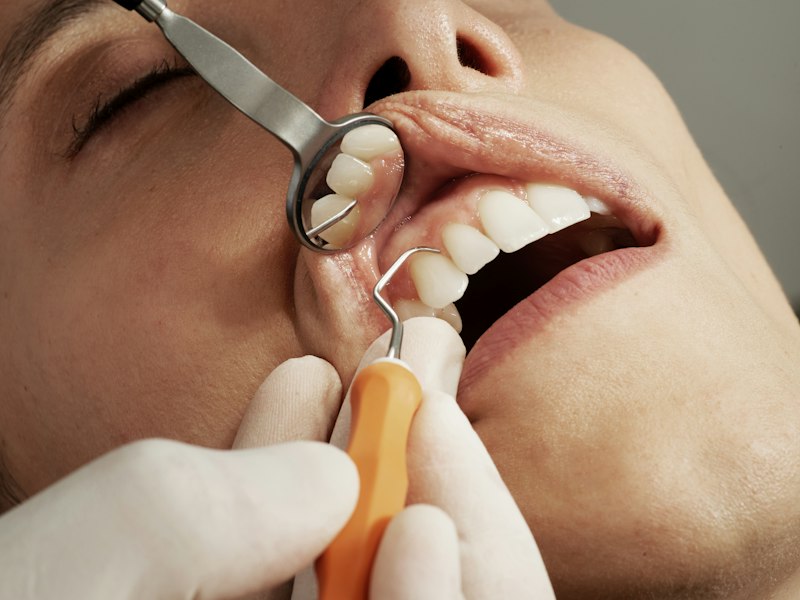
Here is something many patients do not realize until after the fact: the act of removing an amalgam filling temporarily exposes you to significantly more mercury than the filling would release over years of normal wear. Standard high-speed drilling of amalgam generates mercury vapor at rates far exceeding the chronic low-level exposure of a stable filling.
This is the core argument for the SMART protocol — and understanding it changes how you think about finding a provider.
When a dentist uses a high-speed drill to grind out an amalgam filling, the heat and friction vaporize mercury from the exposed amalgam surface at a high rate. Fine particles and aerosol are also generated and dispersed into the treatment room air. Without protective measures, this represents the highest mercury exposure event most patients will encounter in a dental setting.
The SMART protocol was developed by the International Academy of Oral Medicine and Toxicology (IAOMT) specifically to address this. Rather than eliminating mercury exposure — which is not possible when removing an amalgam filling — it systematically reduces it through five layered protective measures.
A rubber dam is a thin sheet of latex (or latex-free material for allergic patients) that is stretched around the tooth being treated, creating a physical barrier that prevents amalgam particles and debris from entering the throat or airway. The rubber dam is the most important single element of SMART protocol — it directly protects the patient's airway during the highest-risk moments of the procedure.
Some dentists use rubber dams selectively or only when asked. Under SMART protocol, it is used on every amalgam removal without exception.
Instead of grinding the amalgam filling into fine particles with a high-speed drill, SMART technique involves cutting the filling into large sections that can be lifted out intact. This dramatically reduces the surface area of amalgam exposed to the drill heat at any given moment, and therefore dramatically reduces the rate of mercury vapor generation during removal.
This is a technique difference that patients cannot observe directly — which is why asking about it specifically before booking matters.
High-volume evacuation is a suction system capable of moving 100 or more liters of air per minute through a wide-bore tip positioned directly at the tooth during drilling. This captures mercury vapor and particles at the source — before they disperse into the treatment room air.
This is different from the standard saliva ejector (the small tube placed under your tongue during routine dental work), which moves a small fraction of that volume and is not positioned to capture airborne vapor. Under SMART protocol, HVE is operated by a dedicated dental assistant at the tooth throughout the procedure. It requires two people working simultaneously.
Even with rubber dam and HVE, some mercury vapor escapes into the treatment room air. A dedicated air filtration unit — running in the operatory throughout the procedure — captures this ambient vapor. Critically, effective mercury filtration requires both HEPA (which captures fine particles) and activated carbon (which adsorbs mercury vapor, a gas that passes straight through HEPA alone).
A unit with HEPA only, or reliance on building HVAC, is not adequate. Ask specifically whether the unit includes activated carbon.
Some SMART practitioners provide a nasal cannula delivering clean oxygen throughout the removal procedure, so the patient breathes clean air rather than room air during the highest-exposure moments. This is the fifth layer of protection and, while not used by every SMART-certified dentist, represents the most complete protective approach.
It is worth being equally clear about what is not part of SMART protocol: expensive supplement packages, post-removal IV therapy, chelation protocols, or mandatory nutritional "detox" programs. These are sometimes bundled by practices into removal appointments, but they have no established clinical basis as requirements for safe amalgam removal and are not part of the IAOMT protocol. If a practice makes expensive supplements mandatory as part of removal, that warrants scrutiny.
The most important thing to understand is that certification and practice are not the same thing. A dentist can hold IAOMT SMART certification and still rush steps or skip elements. The verification comes from asking specific questions — not accepting general assurances.
Before booking, ask:
A provider who answers these questions confidently and specifically is giving you real information. Vague answers about "being mercury-safe" without protocol specifics are a signal to ask more questions or find a different provider.
Our full appointment checklist covers 20 questions to ask before any amalgam removal appointment, and our provider directory lists SMART-certified dentists with their disclosed safety practices.
IAOMT SMART certification is verifiable at iaomt.org/find-a-dentist. Look for dentists listed as SMART certified rather than simply IAOMT members — membership alone does not require completing the SMART training. Certification has renewal requirements, so verify the listing is current.
For more guidance on evaluating providers, see our guide to choosing a qualified dentist and our comparison of SMART vs traditional removal.
For patients who want to understand what holistic dentistry practices more broadly offer, Holistic Dental Care covers the wider landscape of biological dentistry approaches.
This article is for educational purposes only and does not constitute medical or dental advice. Always consult a qualified dental or medical provider before making treatment decisions.